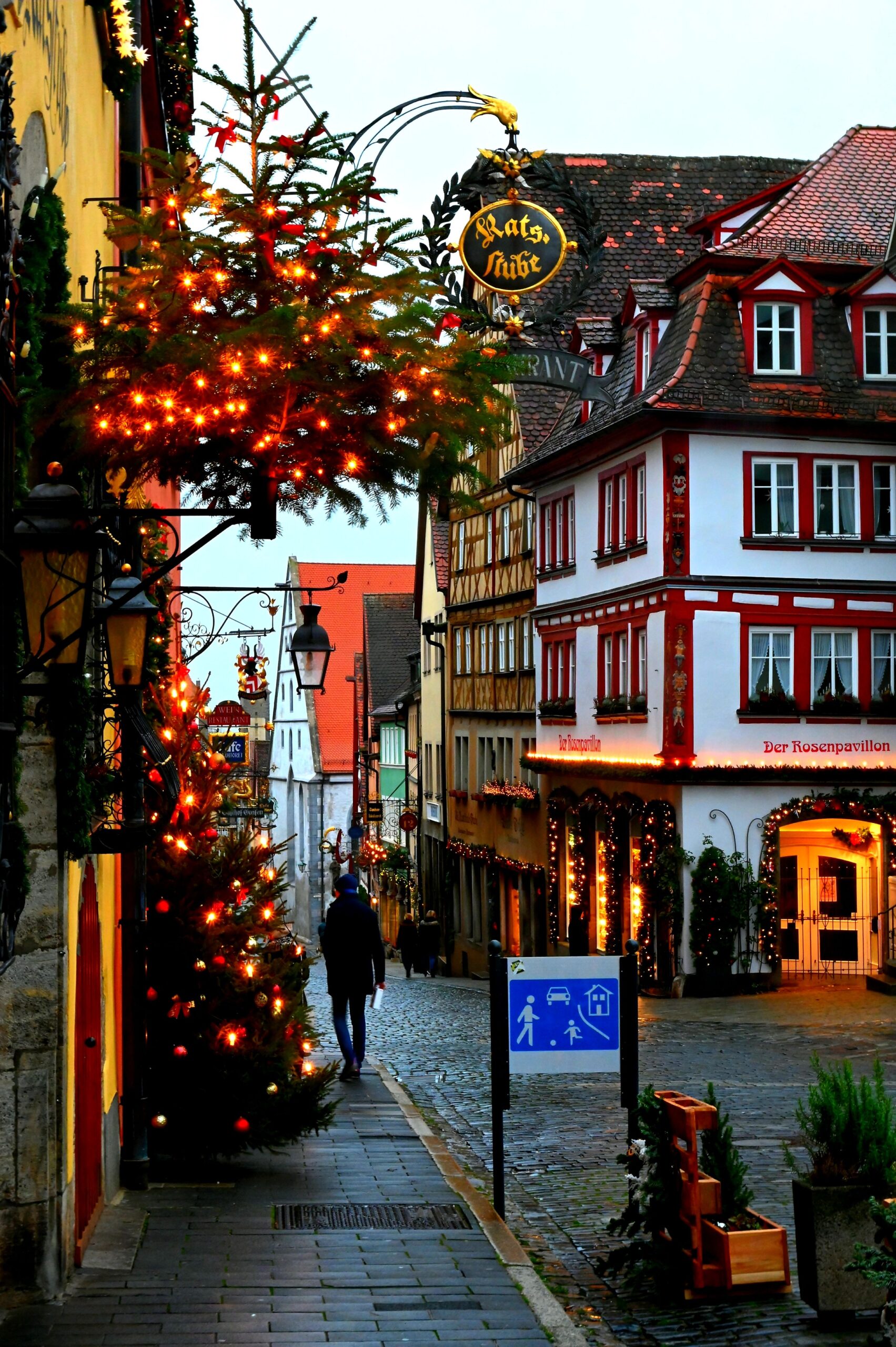
It gets dark by half past four. That’s the trick behind Bavarian Christmas markets. By the time the sky goes navy, the squares are lit up, the stalls are steaming, and an old town that looked ordinary at lunch now looks like the inside of a snow globe. Somebody hands you a mug of Glühwein. Your plans for the evening are now cancelled.
German Christmas markets are the real thing – and Bavaria has many of them. Not a pop-up with a few huts, but traditions that go back centuries, set in front of cathedrals and town halls that were already old when the markets started. We live in Germany, we’ve cooked this food for a living, and every year we still think about standing in a square with greasy fingers and a hot drink. Here are the markets we keep going back to, what to eat at each, and how to plan them.
We’ve included Salzburg. We know. It’s in Austria, but it’s an hour and a half from Munich, and its Krampus run is a big part of why you’d come this time of year.
Bavarian Christmas Market Dates for 2026
Going this year? These are the published dates for the markets in this guide. Hours vary by day, so check the official sites for Munich, Nürnberg and Salzburg before you go.
- Munich Christkindlmarkt (Marienplatz): November 20 to December 24, 2026. New this year, it opens on the Friday before Totensonntag, and like all Munich markets it’s closed on Totensonntag itself (November 22).
- Nürnberg Christkindlesmarkt (Hauptmarkt): November 27 to December 24, 2026. The Christkind opens it with the prologue at 5:30 p.m. on November 27.
- Passau Christkindlmarkt (Domplatz): November 24 to December 22, 2026.
- Rothenburg ob der Tauber Reiterlesmarkt: November 20 to December 23, 2026 (closed November 22).
- Regensburg: the Christkindlmarkt on Neupfarrplatz runs November 23 to December 23, 2026. The Romantic Christmas Market at Thurn und Taxis Castle runs November 20 to December 23, and the Lucrezia market November 27 to December 23.
- Salzburg Christkindlmarkt (Domplatz and Residenzplatz): late November through New Year’s Day. The big Krampus run is on the evening of December 5.
Munich: The Big City Market
The Christkindlmarkt on Marienplatz is Munich’s original. Its roots go back to the 14th century, and it’s been on Marienplatz since 1972. More than 130 stalls spill out of the square and down the pedestrian streets, under a huge Christmas tree in front of the neo-Gothic town hall. There’s live Advent music from the town hall balcony in the evenings.
It’s also crowded. Very crowded on weekends. Go on a weekday afternoon, eat your way through, then peel off to the smaller markets nearby:
- The Medieval Market at Wittelsbacherplatz: wooden stalls, people in period costume, and food cooked over open fire. Our pick for atmosphere.
- The Christmas Village in the Residenz courtyard: calmer, prettier, and a good place to sit down for a minute.
- Winter Magic at the Viktualienmarkt: the food market goes festive from late November into early January. Here’s our guide to the best Viktualienmarkt food stalls.
What to eat in Munich: Reiberdatschi (potato pancakes) with applesauce, Schupfnudeln with sauerkraut, and a Bratwurst in a roll. When your feet give out, go sit down for a proper meal at one of our favorite Bavarian restaurants in Munich. Missing those potato pancakes back home? Here’s our recipe for Kartoffelpuffer on New German Cooking, the recipe site for our cookbook. Munich also has its own Krampus run in the old town during Advent, with a few hundred Krampus and Perchten stomping through the streets.
Salzburg: Cathedral Squares and the Krampus Run
Salzburg’s Christkindlmarkt fills Domplatz and Residenzplatz in the shadow of the cathedral, with the fortress lit up on the hill above. It’s one of the oldest Christmas markets anywhere, and it has the setting to match.
Then there’s December 5. Krampusnacht. In Alpine tradition, Krampus is St. Nicholas’s dark sidekick: horned, hairy, rattling chains and cowbells, there to deal with the kids who weren’t good. On the evening of December 5, Krampus groups in hand-carved wooden masks and heavy fur run through the market and the old town. It’s loud, a little chaotic, and completely unlike anything at an American Christmas. Stand back from the rope if you’re with small children. Or don’t, and let them learn the lesson.
What to eat and drink in Salzburg: raclette bread, roasted chestnuts, and something hot. Austrians lean toward punch, and this is the place to try Jagertee, black tea spiked with rum and spices. Glühwein here costs a bit more than in Bavaria, and the mug deposit is higher, so hang on to your mug.
Passau: The Small Market by the Cathedral
Passau sits where three rivers meet, the Danube, the Inn and the Ilz, and its Christmas market sits right in front of St. Stephen’s Cathedral. It’s much smaller than Munich or Nürnberg, with around 60 stalls, and that’s exactly why we like it. You can actually walk. You can actually talk. The baroque cathedral is lit up behind you, and the old town around it is small enough to see in a day.
Inside the cathedral is one of the largest church organs in the world. If you can, time your visit for a midday organ concert. More on that, and what else to do in town, in our Passau guide.
What to eat in Passau: Baumstriezel, a cylinder of dough spit-roasted over coals and rolled in cinnamon sugar, plus Lebkuchen, roasted almonds, and hot wine from the stalls in front of the cathedral steps.
Nürnberg: The Most Famous of Them All
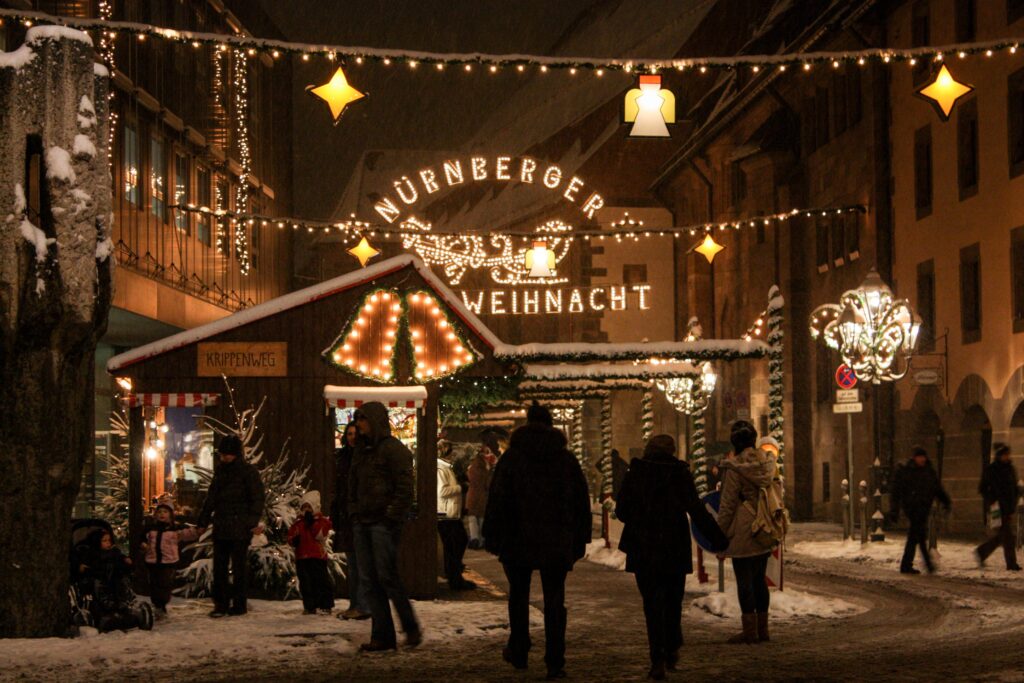
If you only see one Bavarian Christmas market, a lot of people will tell you it should be Nürnberg. The Christkindlesmarkt was first written about in the 1600s, and it’s still a “little town of wood and cloth” on the Hauptmarkt, with rows of stalls under red-and-white striped canopies.
It opens with a ritual worth planning around. On the Friday before the first Sunday of Advent, the Nürnberger Christkind, a young woman elected by the city for a two-year term, stands on the balcony of the Frauenkirche, dressed in gold, and recites the prologue that opens the market. The square packs out for it. Get there early.
Next to the main market are a Children’s Christmas market and a Sister Cities market with stalls from Nürnberg’s partner cities around the world.
What to eat in Nürnberg: this is the best food market of the bunch. Order Drei im Weggla, three finger-sized Nürnberger Rostbratwürste in a roll with mustard. Buy Elisenlebkuchen, the city’s soft, nut-heavy gingerbread, to take home. And look for the Zwetschgenmännla, little figures made from dried prunes and figs that have been a Nürnberg tradition for generations. More on all of it in our guide to German Christmas market food.
Rothenburg ob der Tauber: The Postcard Town
If you’ve ever seen a picture of a German Christmas market with half-timbered houses, a town wall and snow on the rooftops, there’s a good chance it was Rothenburg. Of all the Bavarian Christmas markets, it’s the one that looks most like a postcard. The whole medieval old town is still standing, and in Advent it does exactly what you’d hope.
The market is the Reiterlesmarkt, with around 60 stalls spread across the Marktplatz, the Grüner Markt and the square by St. Jakob’s church. It’s named for the Reiterle, a ghostly rider from old Franconian legend who was said to cross the winter sky carrying the souls of the dead. These days he’s friendlier. On opening day, the Reiterle rides into the market square on horseback in a red cloak, and the big Christmas tree gets lit.
What to eat in Rothenburg: Schneeballen, or “snowballs,” the town’s signature pastry. Strips of shortcrust dough are gathered into a ball, fried, and dusted with sugar or dipped in chocolate. Chef’s advice: buy one fresh and plain from a bakery. The ones that have been sitting in plastic bags for weeks are a different, drier animal. Then get a Bratwurst and a mug of Glühwein, and walk the town wall while there’s still light. Käthe Wohlfahrt’s Christmas Village on Herrngasse is open all year, if you need ornaments.
Rothenburg is small and gets very busy with day-trippers. Stay the night if you can. The town is at its best after the tour buses leave.
Regensburg: Four Markets and a Castle
Regensburg is easy to overlook among Bavarian Christmas markets, and that’s a mistake. It sits on the Danube, its medieval old town is a UNESCO World Heritage site, and in December it runs four main Christmas markets, all within walking distance of each other.
- The Christkindlmarkt on Neupfarrplatz: the city’s oldest and biggest, with around 70 stalls around the Neupfarrkirche. It’s free, and the Regensburger Domspatzen, the cathedral’s famous boys’ choir, perform there.
- The Romantic Christmas Market at Thurn und Taxis Castle: in the courtyard of Schloss St. Emmeram, still home to the princely Thurn und Taxis family. It’s the one Regensburg market that charges admission, and it’s worth it after dark. The castle has its own Christkind, who appears several times a day.
- The Lucrezia market at Haidplatz and the market at Kohlenmarkt: smaller, with more crafts, and good for a calmer stroll.
What to eat in Regensburg: look for wild boar on the spit at the castle market, and a Regensburger Knackersemmel, the local sausage in a roll. Then walk down to the river, where the centuries-old Wurstkuchl by the Stone Bridge grills small sausages and serves them with sauerkraut and sweet mustard all year round.
How to See Bavarian Christmas Markets in One Trip
The four cities connect easily by train or coach. Munich and Salzburg are about an hour and a half apart. Passau sits on the Danube between Munich and Nürnberg, and Nürnberg loops you back to Munich for the flight home. One week gives you enough time to do it without rushing:
- Munich: start here. The big airport, the big market, and the beer halls.
- Salzburg: two nights, timed to land on December 5 for Krampusnacht.
- Passau: slow down on the Danube. Small market, big cathedral.
- Nürnberg: save the most famous market and the best sausages for last.
- Back to Munich: one last night before you fly.
Got extra days? Rothenburg is an easy day trip from Nürnberg by train, with a change in Steinach. Regensburg sits on the Danube between Passau and Nürnberg, so it fits neatly into the same route, and it’s about 90 minutes from Munich on a direct regional train.
Tips for Visiting Bavarian Christmas Markets
- Go early in December. You get the Krampus runs, and the markets are calmer than in the last two weeks before Christmas.
- Do weekdays in the big cities. Save the weekend for Passau or a smaller town.
- Arrive at dusk. Come mid-afternoon, eat while it’s still light, and stay for the moment the lights come on.
- Dress like you’ll be standing outside for four hours. Because you will be. Warm boots, a hat and gloves.
- Carry cash and keep it close. Cards are more common now, but not universal. The crowds are also where pickpockets work. Here’s how we protect our wallets when we travel.
- Book hotels early. Rooms near the old towns in Nürnberg and Salzburg fill up fast in December.
FAQ About Bavarian Christmas Markets
When do Bavarian Christmas markets open?
Most open in the second half of November and run until Christmas Eve (December 24). Many close by early afternoon on December 24, and some smaller ones end earlier in December.
Which is the best Christmas market in Bavaria?
Nürnberg is the most famous and has the best food. Munich has the most variety. Passau is the most relaxed. Rothenburg is the most picturesque, and Regensburg’s castle market is the most atmospheric. For the full experience, see more than one.
When is the Krampus run in Salzburg?
The main Krampus run at the Salzburg Christkindlmarkt is on the evening of December 5, Krampusnacht. Smaller runs take place around the region in late November and early December.
Is Salzburg in Bavaria?
No, Salzburg is in Austria. But it’s just across the border from Bavaria, and it’s an easy addition to any Bavarian Christmas market trip.
Do It With Us in 2027
If this year’s trip isn’t in the cards, next year’s can be. From December 3 to 10, 2027, we’re taking a small group of no more than 17 travelers on the exact route above: Munich, Salzburg, Passau and Nürnberg. We’ll be in Salzburg for Krampusnacht, bake apple strudel and cookies there, spend two nights on the Danube with a Christmas goose dinner based on the recipes in our cookbook, New German Cooking, and eat our way through every market in between. We handle the hotels, transport and reservations. You handle the Glühwein.
See the Bavarian Christmas Market Tour 2027
Which Christmas market is at the top of your list? Let us know in the comments.