Our 6 Favorite Traditional Bavarian Restaurants in Munich Right Now
Dark wood. Low ceilings. A server who’s been carrying plates here longer than you’ve been alive. A Helles sweating on the table. That’s the room we’re always looking for in Munich, and these Bavarian restaurants are where we keep finding it.
Munich, being the largest city in Bavaria and its historic capital, has no shortage of places to eat traditional Bavarian food. You’ll find beer halls, historic breweries, neighborhood Wirtshäuser, beer gardens, and restaurants serving everything from Schweinshaxe to Schnitzel to old school and rarely seen specialties like Sauerlungerl (lungs in vinegar sauce) or Milzwurst (spleen sausage).
We’ve eaten in many of them throughout the years and right now these are our favorites. We tried to keep it in the most central area so it’s easy to get to for most tourists.
These are the six places in Munich we find ourselves recommending again and again. Some are famous institutions, while others are smaller spots that deserve just as much attention. Most importantly, every restaurant on this list has at least one dish that keeps us coming back.
If you’re looking for traditional Bavarian food in Munich, these are six of our favorites right now. Come hungry.
1. Augustiner Keller
📍 View Augustiner Keller on Google Maps
Augustiner Keller is one of those quintessential Munich experiences that we never get tired of.
In the warmer months, the huge beer garden beneath the chestnut trees is reason enough to visit. Grab an Augustiner beer, find a table, and settle in for one of the classic Munich beer garden experiences.
But we come for the food, too.
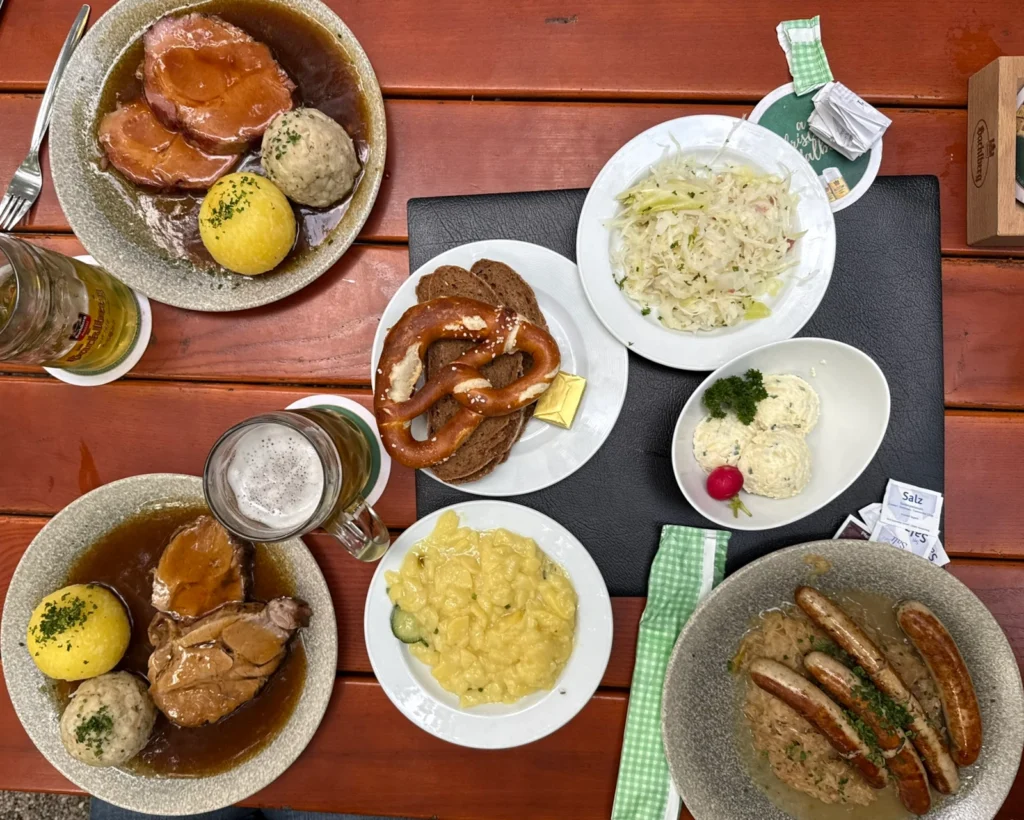
I recently had the Fränkische Bratwurst. These coarse Franconian-style sausages have a much more rustic texture than the finely ground bratwurst many visitors are familiar with, and the version at Augustiner Keller is outstanding. I loved the pronounced herb flavor and the coarse texture and it was perfectly grilled.
If you’re visiting Munich during beer garden season, this is one of our favorite places to spend a long afternoon or evening. Look for beer from the wooden barrel. It’s softer. Rounder. You’ll taste it. And yes, it is in a wooden barrel, not lined with metal or plastic like the naysayers will tell you.
What we order: Fränkische Bratwurst
2. Andechser am Dom
📍 View Andechser am Dom on Google Maps
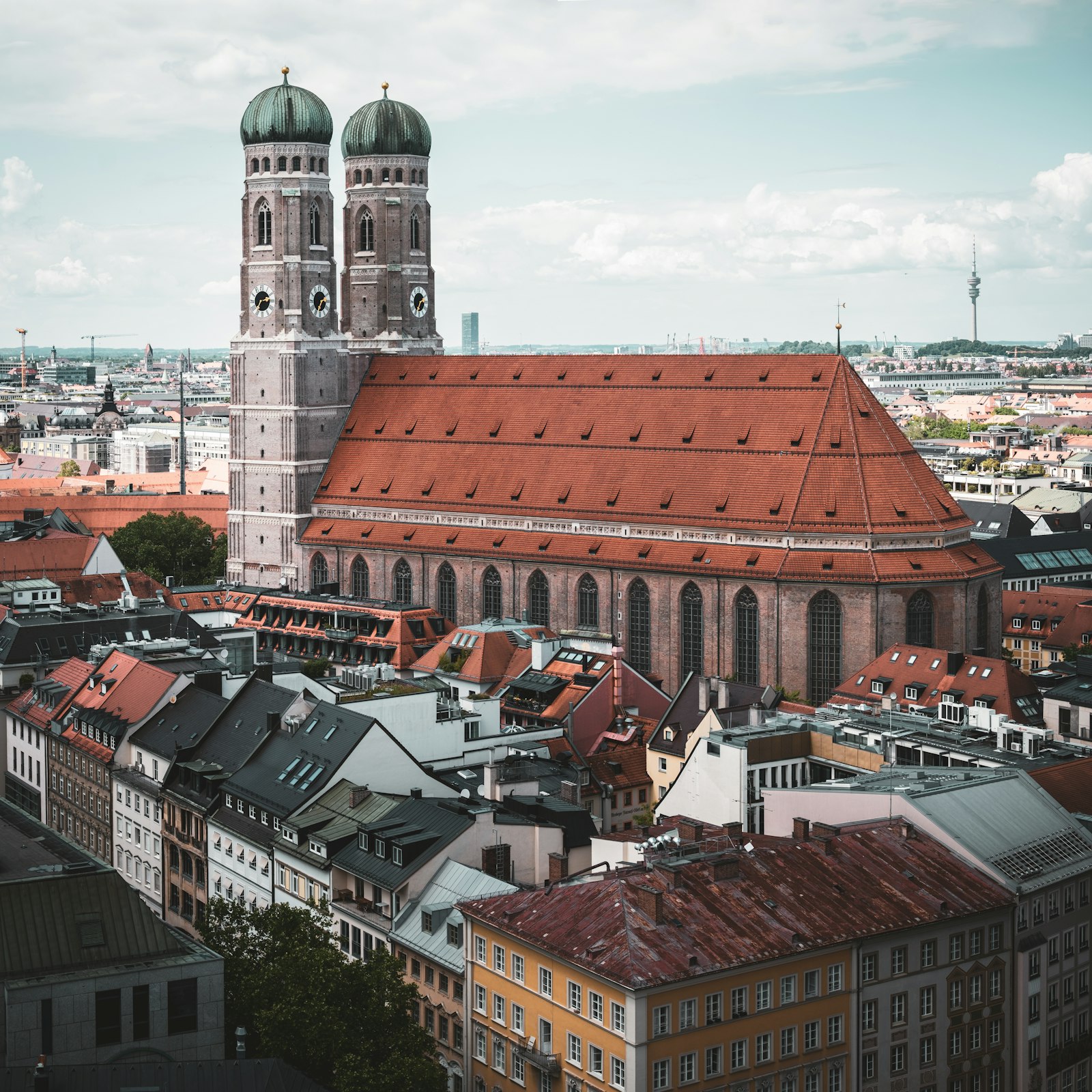
Located just steps from the Frauenkirche, Andechser am Dom is right in the heart of Munich’s Altstadt and is one of our favorite stops for hearty Bavarian cooking.
There are two dishes here that we have a hard time choosing between.
The Zwiebelrostbraten with Käsespätzle is fantastic. You get tender steak with a rich brown gravy topped with plenty of deeply browned onions alongside rich, cheesy Spätzle — exactly the kind of meal you want with a cold beer.
We’re also big fans of the Fleischpflanzerl (Frikadellen), Germany’s version of meat patties or meatloaf-style meatballs. They’re served with savoy cabbage that is salty, creamy, and ridiculously good.
It might not be the dish that first catches your eye on the menu, but that cabbage alone is worth ordering. In summer, grab a table outside in the narrow lane beside the cathedral and watch the city go by.
What we order: Zwiebelrostbraten with Käsespätzle or Fleischpflanzerl with creamy savoy cabbage
3. Zwickl
Zwickl is a little different from Munich’s massive historic beer halls, and that’s one of the reasons we like it so much. It’s a small restaurant with an Alpine vibe. The bathroom in the basement even has a mural of a cow grazing in an Alpine meadow and the speaker plays cow sounds. The whole place feels like a hut in the mountains. It’s awesome.
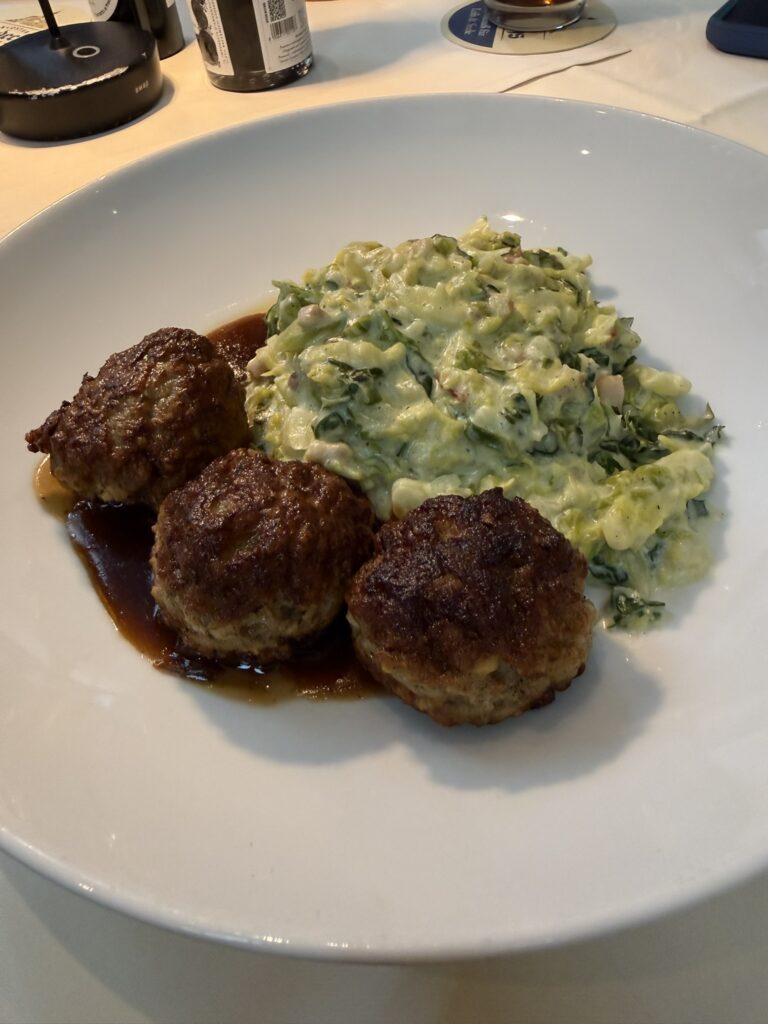
The restaurant specializes in Fleischpflanzerl, and their housemade version is one of the best we’ve had in Munich.
If you’ve never tried Fleischpflanzerl before, think of them as Bavarian meat patties — similar to a very tender meatball or small meatloaf, usually pan-fried until nicely browned on the outside. Throughout most of Germany they are called Frikadellen, but here in Munich they’re called Fleischpflanzerl and they are amazing. Besides this place, the stand in the Viktualienmarkt serves one of the best I’ve had. Read our post about it here.
Zwickl takes the dish seriously, and it shows.
We especially love the veal Fleischpflanzerl with herbs. They’re tender, flavorful, and a great example of how good simple Bavarian cooking can be when it’s done well.
What we order: Veal Fleischpflanzerl with herbs or any of their specials
4. Haxengrill
📍 View Haxengrill on Google Maps
Sometimes you just want a giant piece of crispy pork.
That’s when you go to Haxengrill.
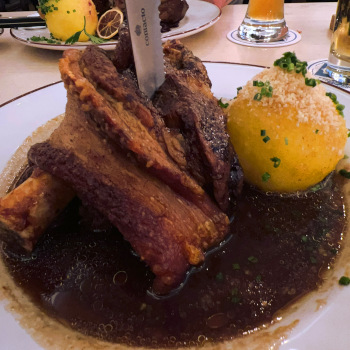
As the name suggests, Schweinshaxe — roasted pork shank (usually called knuckle here, but not what you would think) — is the star of the show here, and we think they serve some of the best in Munich.
A great Schweinshaxe is all about contrast. The meat underneath should be tender and juicy, while the skin on the outside should be deeply roasted and incredibly crisp. It’s like a whole pig roast on a plate.
Haxengrill nails it. Watch the knuckles turning on the spit by the door before you go in. The pork shanks, browned from the constant fire of the rotisserie and glistening with delicious pork fat is one of the best examples of window shopping we’ve seen. Get a dark Augustiner beer and the Schweinshaxe. Trust us. You won’t be disappointed.
What we order: Schweinshaxe
5. Schneider Weisses Bräuhaus
📍 View Schneider Weisses Bräuhaus on Google Maps
Schneider Weisses Bräuhaus is already worth visiting if you love Weissbier, and it’s one that we always stop into when visiting. Josef Nagler, the chef, visited us in Philadelphia many years ago and cooked a dinner for a sold out crowd of beer enthusiasts dying to meet the Brewmaster and enjoy the recipes of the Bräuhaus straight from the chef. When in Munich, we always make it a point to say hi!
All of the food I’ve had is great! It sits right on the Tal, a few steps from Marienplatz, and the Weißwurst breakfast here is one of the best in town.
Their pretzel-crusted Schnitzel is a really fun take on the classic.
Instead of the usual breadcrumb coating, the Schnitzel gets a crust made with pretzel, giving it extra crunch and a flavor that feels perfectly at home in Bavaria.
If you’re feeling adventurous, give one of the items on the Kronfleischküche a try. It’s an old Bavarian tradition of offal meats like lungs, liver, spleen, and so on. You can read about the tradition here. The Sour lungs and the spleen sausage are actually really good and surprisingly not as bad as you’d think. I will say that it’s definitely something that isn’t for everyone though.
Schneider’s wheat beers are well known outside of Germany as well and you will not be disappointed!
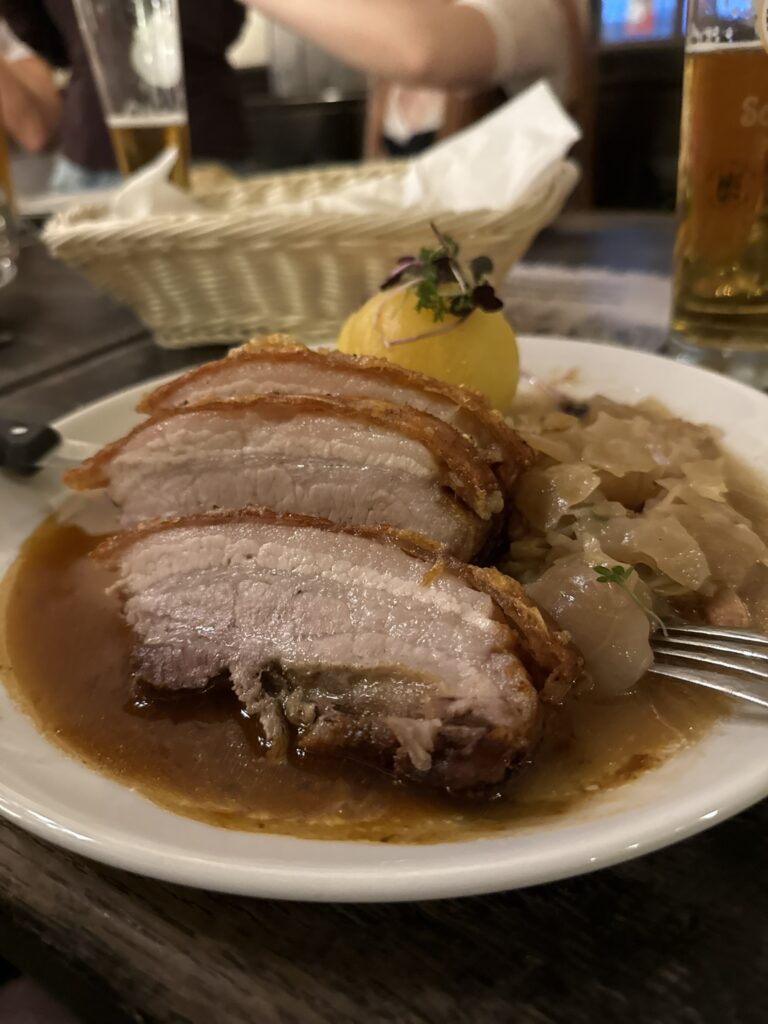
What we order: Pretzel-crusted Schnitzel, Spanferkel
6. Königlicher Hirschgarten
📍 View Königlicher Hirschgarten on Google Maps
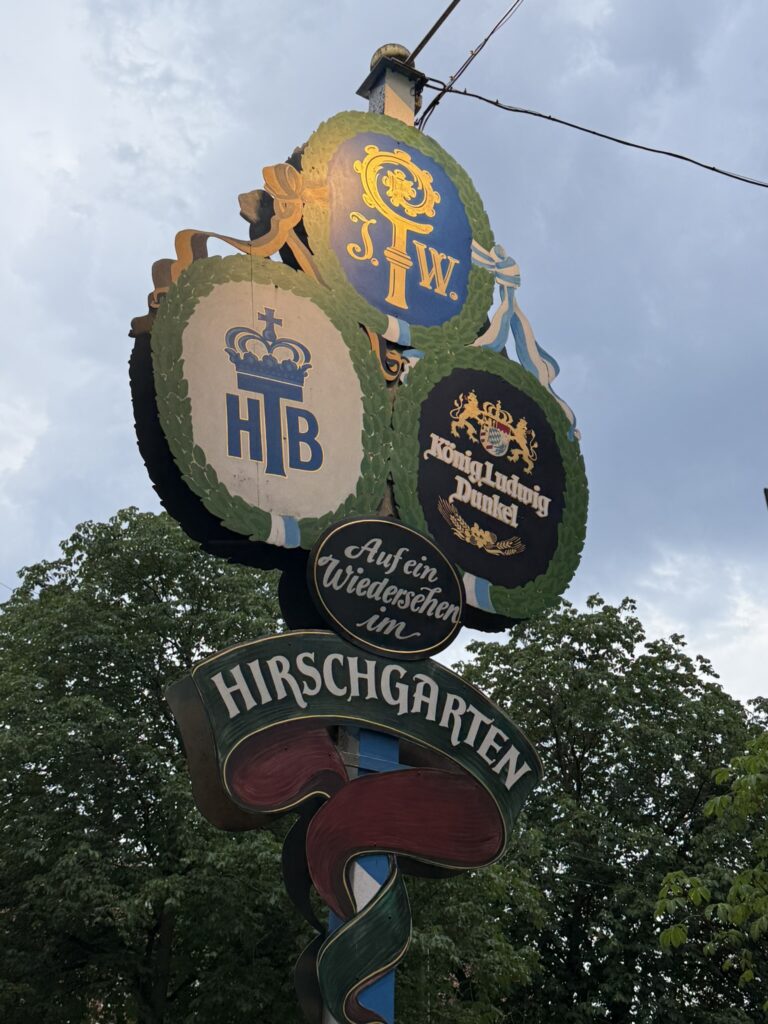
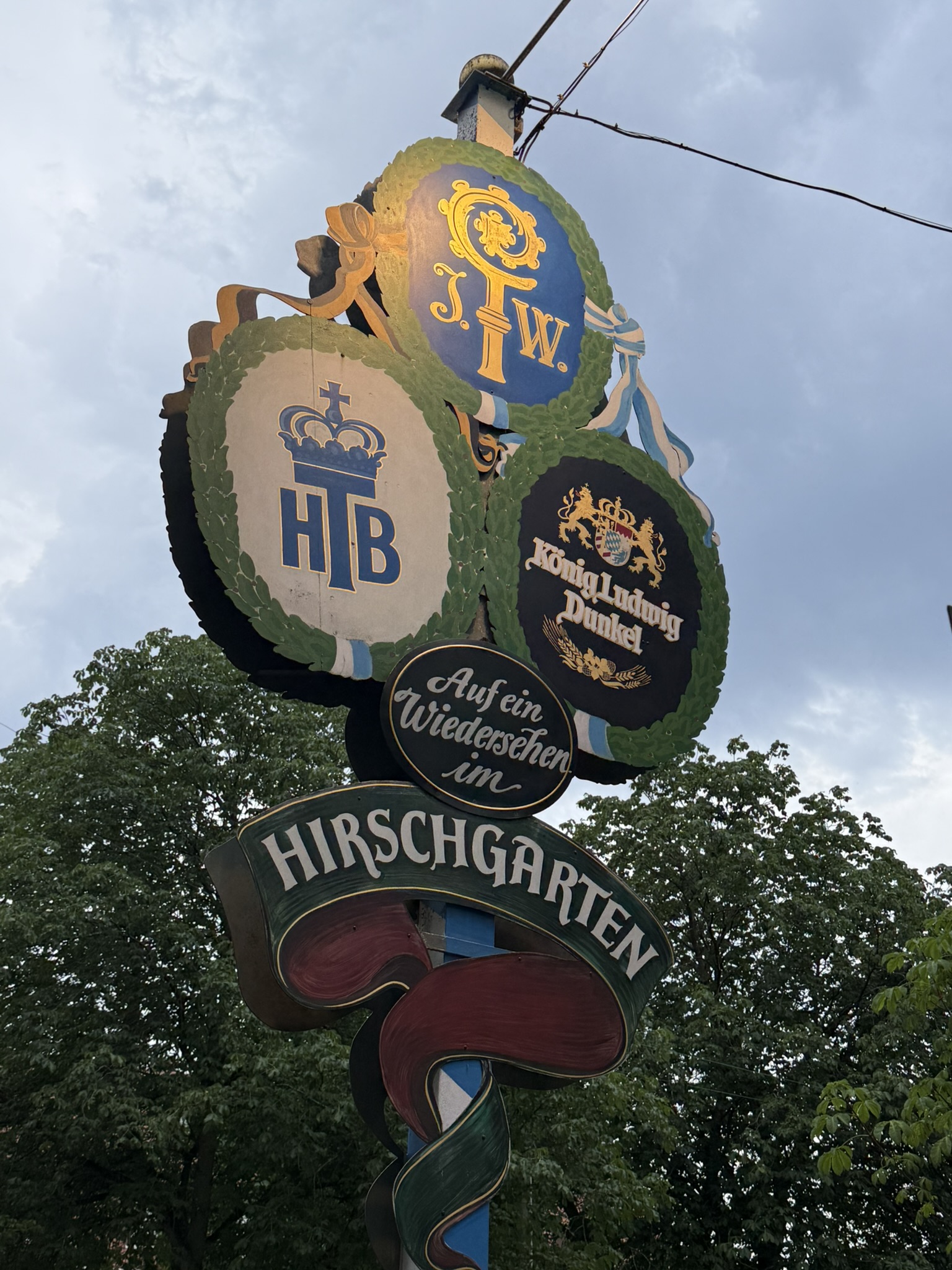
The Hirschgarten isn’t in the old town. It sits out west between Laim and Nymphenburg, a quick S-Bahn ride to the Hirschgarten stop and a short walk through the park. It’s worth the detour.
The name means “Royal Deer Garden,” and that’s not a metaphor. In 1780, Elector Carl Theodor fenced off this land and stocked it with around a hundred deer. There are still deer here today, grazing in their enclosure right beside the beer garden while you work through your second Maß.
And it’s big. Roughly 8,000 seats under the trees, which makes it the largest beer garden in Munich. On a warm weekend it fills with families, students, office crews and old-timers who’ve had the same table for decades. In the self-service section, locals still bring their own picnic and just buy the beer, which is one of the great Munich traditions and a law which all beer gardens must adhere to. Every beer garden must have a section allowing people to bring their own food.
The beer here is Augustiner. And like many establishments in Munich, you can buy an Augustiner Helles tapped from wooden barrels.
The food is classic beer garden fare: a crackling half Hendl (roast chicken), Steckerlfisch grilled on a stick over the coals, spare ribs, and a bowl of Obatzda with a Brezn. Nothing fancy. It doesn’t need to be. But the real highlights are the deer specialties. Hirschgulasch, a paprika colored stew of deer meat is a winner. Rich, hearty, and with just enough spice – it’s the perfect dish here, although it can feel a bit weird to be eating meat from an animal you are sitting literal feet away from.
What we order: Half Hendl, Steckerlfisch, Obatzda with a Brezn, and an Augustiner Maß
Tips for Eating at Bavarian Restaurants in Munich
- Reserve for dinner. Especially on weekends and in September. Lunch is easier.
- Share tables. Ask “Ist hier noch frei?” and sit down. That’s normal here.
- Leave the Stammtisch alone. That table belongs to the regulars.
- Read the specials board. The Tagesgericht is usually the kitchen’s best work, and the best value.
- Tip the local way. Round up, or add five to ten percent, and tell the server the total when you pay.
- Carry some cash. Most places take cards now. Not all.
- Graze the market, too. The Viktualienmarkt is a short walk from several of these places. Here’s our guide to the best Viktualienmarkt food stalls.
Which of These Bavarian Restaurants in Munich Should You Visit?
If we had to match these restaurants to different Munich experiences, here’s how we’d choose:
For a summer beer garden: Augustiner Keller
For a meal in the heart of the Altstadt: Andechser am Dom
For Fleischpflanzerl: Zwickl
For Schweinshaxe: Haxengrill
For something a little different: Schneider Weisses Bräuhaus
For the biggest beer garden in town: Königlicher Hirschgarten
The best part is that these aren’t six versions of the same restaurant. And this list might change as we experience more restaurants. One day I’ll publish a more comprehensive guide, but that could take years. There are so many amazing Bavarian restaurants in Munich and only so much time.
FAQs About Bavarian Restaurants in Munich
What is the most traditional food in Munich?
Roast pork with dumplings, Schweinshaxe, Weißwurst with sweet mustard and a pretzel, and Fleischpflanzerl. For the brave, the old offal dishes of the Kronfleischküche, like sour lungs and spleen sausage.
What is Fleischpflanzerl?
A Bavarian pan-fried meat patty, somewhere between a meatball and a small meatloaf. Elsewhere in Germany it’s called a Frikadelle.
Do I need reservations at Bavarian restaurants in Munich?
For dinner in the old town, especially on weekends, yes. Beer gardens don’t take them for most tables.
Have you eaten at any of these restaurants? Let us know which one is your favorite — or which Munich Wirtshaus you think we need to try next.