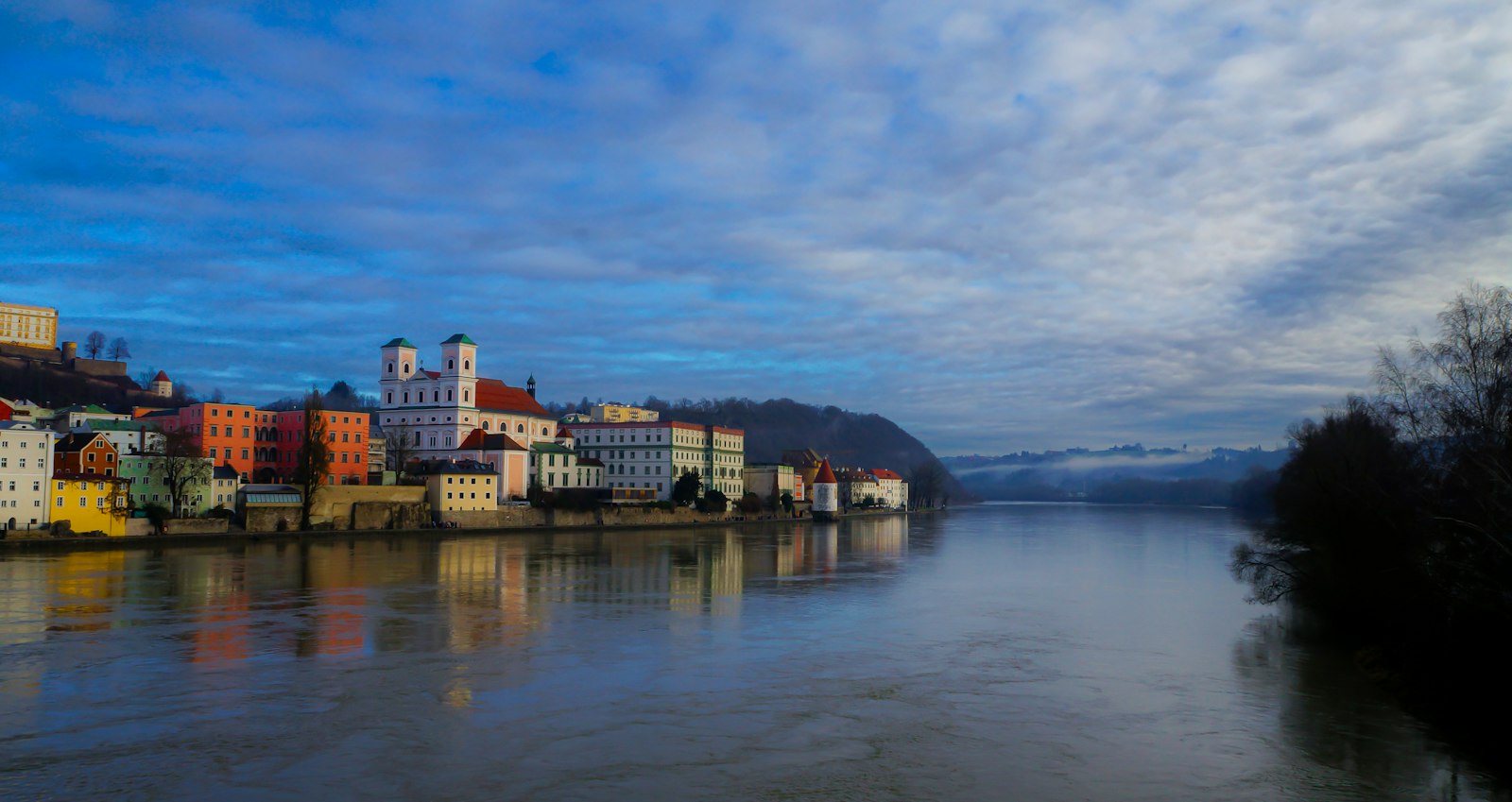
Most people meet Passau from the top deck of a river cruise ship. They get two hours, a cathedral, a gift shop and a fast walk back to the gangplank. That’s a mistake. Of all the things to do in Passau, the best one is simply to stay the night, because this small Bavarian city on the Austrian border is one of the most rewarding places to eat, drink and wander in southern Germany.
Three rivers meet here: the Danube, the Inn and the little Ilz. Prince-bishops ran the place for centuries. Later, Italian architects rebuilt it after a fire. As a result, it looks like a slice of northern Italy dropped onto a Bavarian peninsula, with brewery beer gardens on one bank and a 13th-century fortress on the other.
A Short History of a Very Old Town
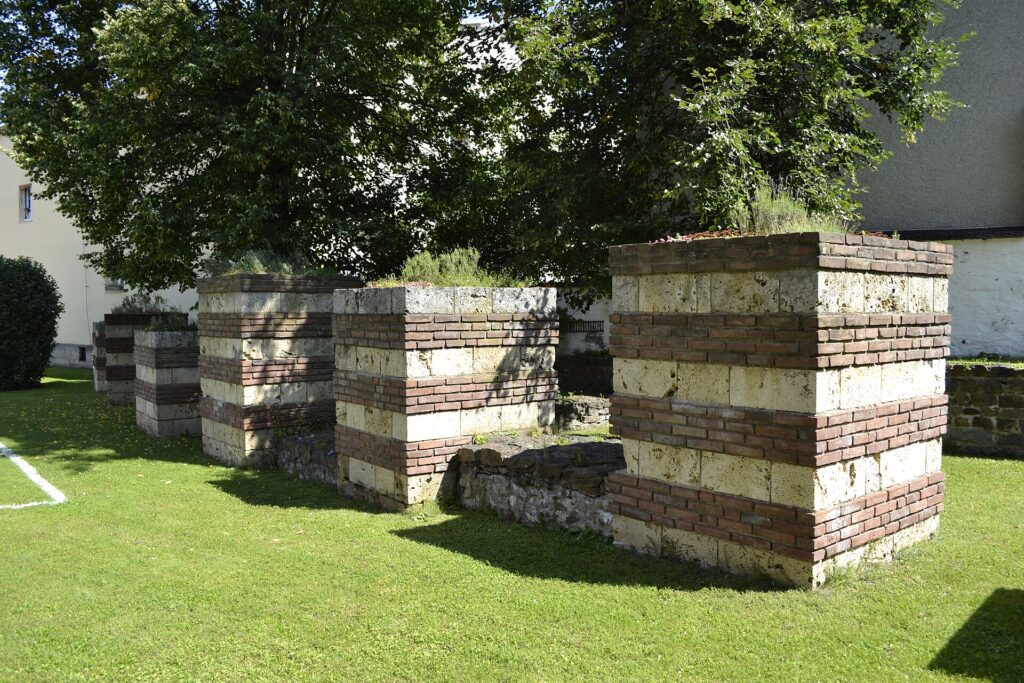
People have lived on this rock for a long time. Celts traded salt and graphite pottery here centuries before the Romans showed up. After that, Rome held the river crossing for about 400 years, with a fort called Boiotro on the Inn side and a settlement known as Batavis. That name, eventually worn down, gives us “Passau.” You can still see the walls of the Roman fort at the Römermuseum Kastell Boiotro in the Innstadt district.
The bishops came next, and they never really left. In 1217 Bishop Ulrich II was made an Imperial Prince. In other words, Passau’s bishops ruled as secular lords as well as churchmen. Two years later he laid the foundation stone for the fortress on the hill that became the Veste Oberhaus. The prince-bishops held power until 1803, when secularization handed the city to Bavaria.
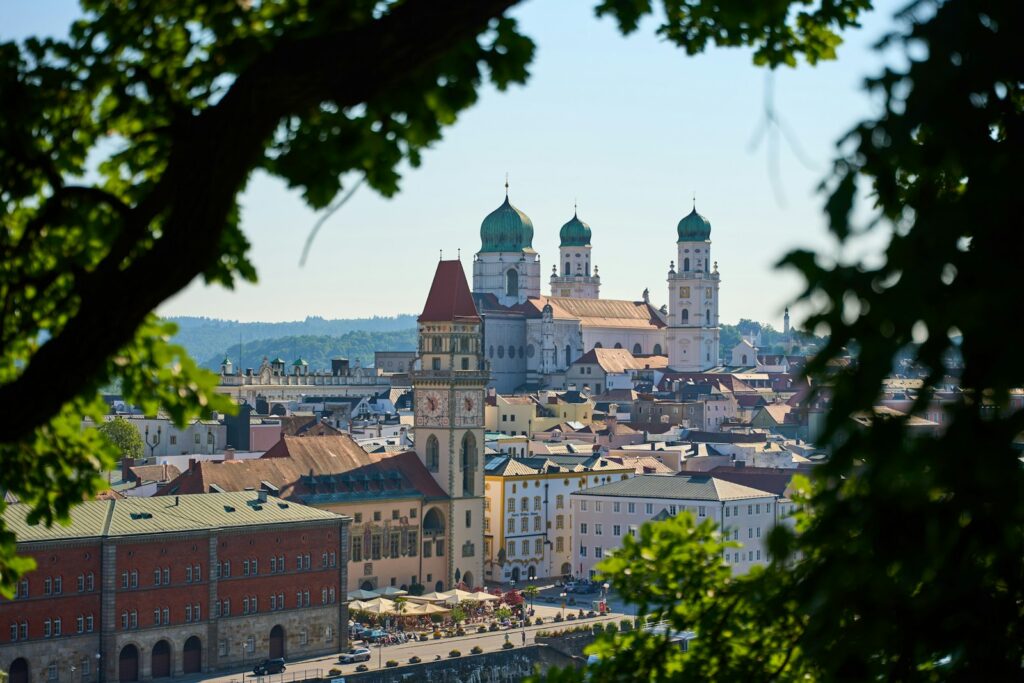
The town you walk through today was shaped by disaster. In 1662 a fire tore through Passau and nearly destroyed the cathedral. Afterward, the bishops brought in Italian builders, led by Carlo Lurago and Giovanni Battista Carlone, to rebuild it. That’s why the old town has its pastel facades, arcades and onion-topped towers. The rivers have their own say, too. In June 2013 the Danube peaked at 12.89 meters, the worst flood since the great flood of 1501. Look for the high-water marks on buildings around the old town and you’ll understand why locals watch the river so closely.
Culture and Character
For a city of its size, Passau punches well above its weight on culture. The Scharfrichterhaus on Milchgasse is a good place to start. The building dates to around 1200 and was once the home of the city’s executioner. Since 1977 it has been a jazz and political cabaret stage. In addition, since 1983 it has handed out the “Scharfrichterbeil,” or executioner’s axe, one of the best-known prizes in German cabaret. Comedian Hape Kerkeling was the first winner.
Right on the town hall square, the Passau Glass Museum holds more than 30,000 pieces of European glass made between 1650 and 1950. Around 17,000 of them are on display across 25 rooms. The guest of honor at its 1985 opening was Neil Armstrong, which tells you how seriously this town takes its glass.
On top of that, the university keeps the city young, so the bars and cafés never feel like they’re only open for tourists.
Food and Dining in Passau
We spent years cooking Bavarian food in Philadelphia, so we came to Passau with a working knowledge of traditional food. There is some great traditional Bavarian food here. Passau sits right on the Austrian border, and the cooking reflects that. Expect more dumplings, more Danube fish and more serious pastry than you’d find further north. The Jägerschnitzel here is never breaded, unlike in the western cities. I’ve had breaded Schnitzels with sauces in Cologne, Frankfurt, and more – but never here.
For a proper Bavarian lunch, head to the Bayerische Löwe on Dr. Hans-Kapfinger, across from the big mall, the Stadgalerie. Order a Helles served in a cooled ceramic mug. Next, get the Pfannkuchensuppe, a clear beef broth with ribbons of sliced pancake, then the crispy skinned roast pork with a potato dumpling and bread dumpling and a side of cabbage salad. Finish with the caramelized Kaiserschmarrn – a thick, torn pancake caramelized in a pan. Then take a long walk through the pedestrian zone in the old city.
The Heilig-Geist-Stiftsschenke on Heiliggeistgasse goes back to the 14th century. It still serves fish from the foundation’s own ponds and wine from its own vineyards. In summer you eat under chestnut trees. In winter, however, you sit in vaulted, wood-paneled rooms that feel built for roast goose and a second glass.
Brewery Beer and Beer Gardens
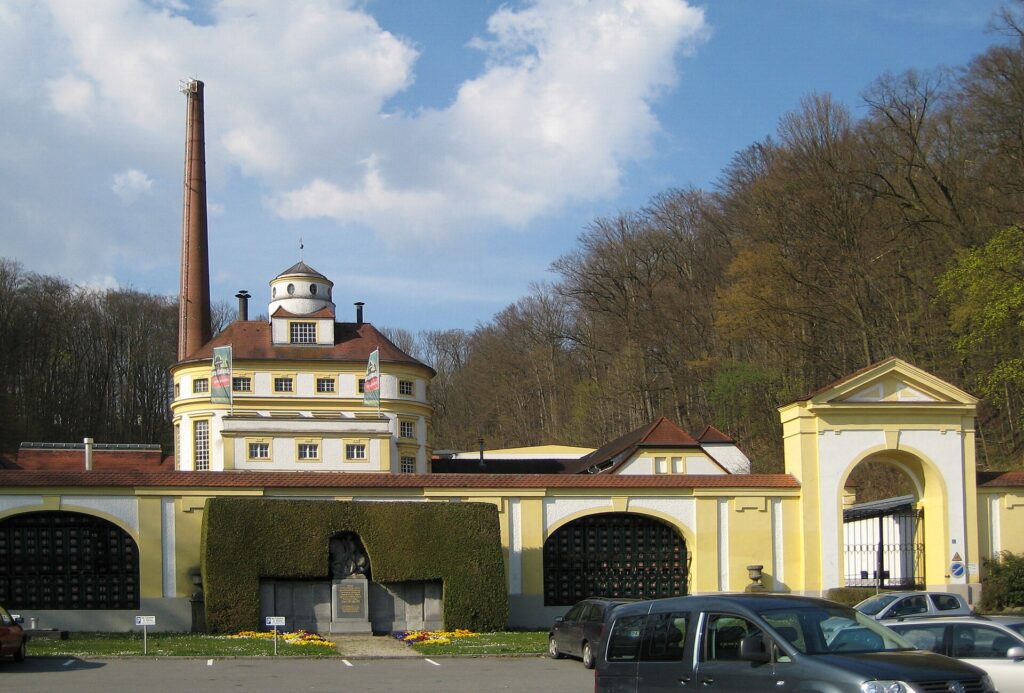
Beer here is a local matter. The Hacklberger Bräustüberl has been brewing on the north bank of the Danube since 1618. Its beer garden under old chestnut trees is where Passau goes on a warm evening. Come in the morning for a Weisswurst breakfast, or at lunch for its small “Bräustüberl tapas,” like mini Grammelknödel (dumplings with crisp pork cracklings) with black radish. Meanwhile, over in the old town, the Peschl-Terrasse on Rosstränke serves hearty schnitzel and beer brewed downstairs, with a terrace that looks straight out over the Danube.
Up the hill on the Inn side, Andorfer Weissbräu on Rennweg pours its own wheat beer with some amazing German food at lunch and dinner. If you’re visiting in the summer, be sure to sit outside in the biergarten. Order a wheat beer and enjoy the farmland views. If you’ve had enough pork for one day, Il Monastero on Schrottgasse is widely considered the best Italian restaurant in town.
Coffee and Cake
Finally, leave room for Kaffee und Kuchen, the afternoon ritual of coffee and cake. Café Simon on the Rindermarkt makes its own cakes, tarts, chocolates and pralines and has a big terrace for people-watching. KaffeeWerk on Kirchenplatz is a smaller spot with good coffee, and Café Greindl on Wittgasse has a garden for slow afternoons.
Things to Do in Passau
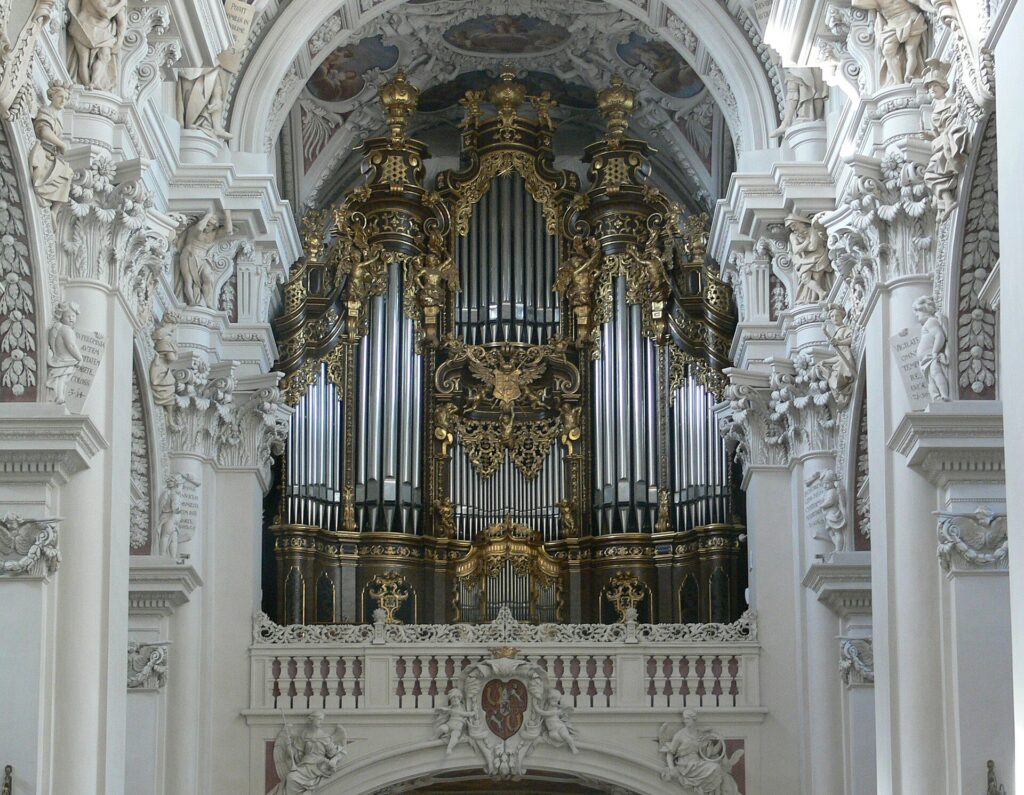
Once you’ve eaten (and you will eat well), go listen to the organ. St. Stephen’s Cathedral holds what is billed as the largest cathedral organ in the world. It has 17,974 pipes and 233 registers spread across five separate sections. From May to October there’s a short concert at noon on working days, and tickets cost a few euros. Keep in mind that the organ is being restored section by section, so you won’t hear every pipe at once, but it still makes the whole building hum. The cathedral is one of the largest Italian Baroque buildings north of the Alps, so give yourself time inside before the music starts.
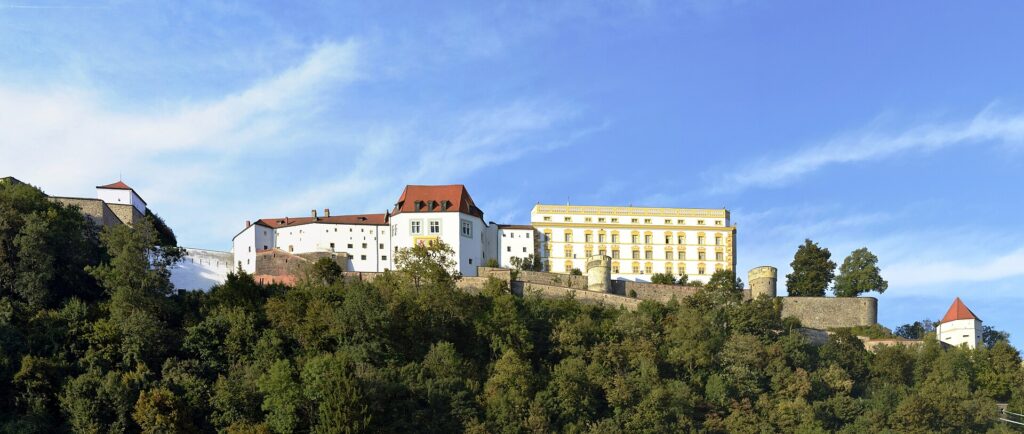
Next, cross the Danube and climb up to the Veste Oberhaus. The fortress began in 1219 and grew over the centuries into the Baroque stronghold you see today. From 1822, for example, it served as a prison. Since 1931 it has belonged to the city and housed a museum. Even if you skip the exhibits, the view down onto the old town and the rivers is worth the walk. The restaurant, with its modern take on traditional Bavarian food and views of the city, is worth the trek up the hill.
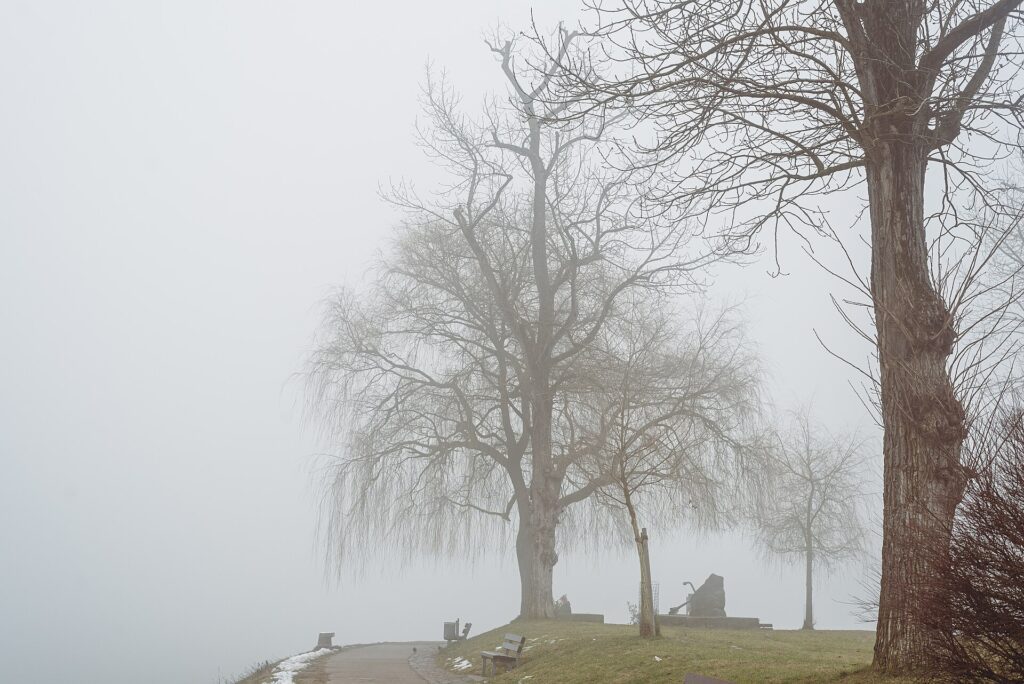
Finish at the Dreiflüsseeck, the very tip of the old town peninsula where the three rivers meet. On a clear day you can see the colors run side by side before they mix: the green, glacier-fed Inn, the dark, peaty Ilz and the Danube in between. It’s one of the best free things to do in Passau, and the walk there takes you through the quietest lanes in the old town.
Iconic Streets and Landmarks
The old town is small enough to cover on foot in an afternoon, but that’s no reason to rush. The Residenzplatz, just behind the cathedral, is framed by the bishops’ old residence and the Wittelsbach Fountain. Höllgasse, a narrow lane running down toward the Danube, is lined with artists’ studios and small galleries. It’s also home to Königlich Bayrisch if you need another round of Bavarian specialties.
Next, cross the bridge to the Innstadt for a different view. It’s quieter, more residential and home to the Roman museum. Walk back along the Inn promenade as the light drops and you’ll see the old town’s towers lined up on the far bank.
Passau After Dark
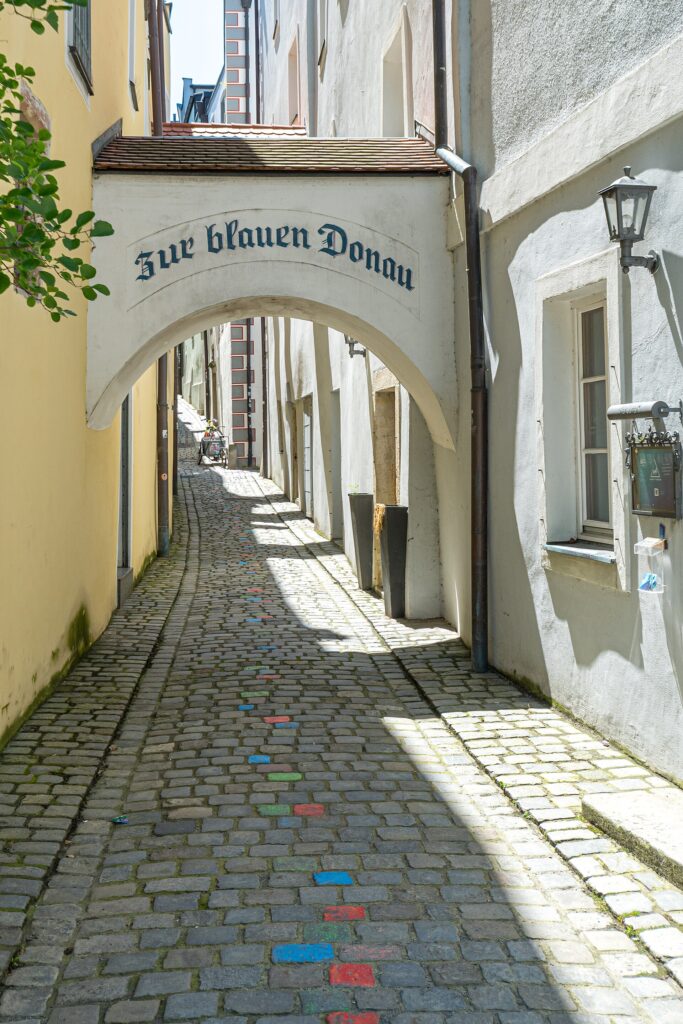
Passau isn’t a party town, and that suits us fine. Book a cabaret night at the Scharfrichterhaus. Your German doesn’t have to be perfect, because the room tells you when to laugh. For wine, WeinGut on Theresienstrasse pairs a strong list with international and Central European cooking. In summer, the Hacklberg beer garden fills up as soon as the sun goes down.
The cathedral also runs a monthly organ concert on Thursday evenings at 7:30 p.m. Hearing that organ in a dark, candle-warm Baroque church is a different experience from the lunchtime rush.
Passau at Christmas
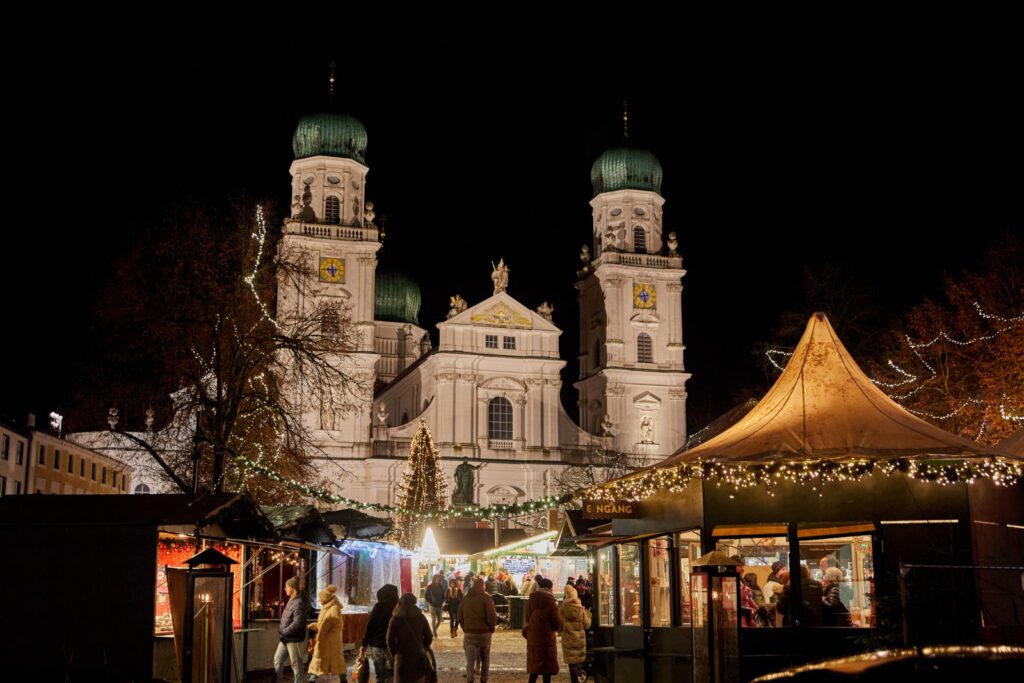
In December the Christkindlmarkt takes over the square in front of the cathedral, and the organ switches to Advent concerts at noon from Wednesday to Saturday. That combination of mulled wine, Baroque towers and a 17,974-pipe soundtrack is exactly why we spend two nights here on our Bavarian Christmas Market tour.
How to Get There and Around
Passau is easy to reach by train. Direct regional trains from Munich take about two hours and fifteen minutes, so you can grab lunch at the Viktualienmarkt in Munich and still be in Passau for an evening beer. ICE trains run from Regensburg in about an hour, from Nuremberg in about two hours and from Vienna in about three. Linz, just across the border, is a little over an hour away.
Once you arrive, however, walk. The main station is a short stroll from the old town. Almost everything worth seeing sits on or near the peninsula, so comfortable shoes are the only real requirement. The climb to the Veste Oberhaus is steep, so take it slowly.
Above all, come early in the day, before the cruise crowds arrive, or stay overnight so you have the streets mostly to yourself in the evening. Book dinner ahead at the more popular restaurants, especially on weekends and in summer.
Sources
Passau Tourism. (n.d.). St. Stephen’s Cathedral. City tourism office
Passau Tourism. (n.d.). Cafés. City tourism office
Oberhausmuseum Passau. (n.d.). History of the castle. Oberhausmuseum
museum.de. (n.d.). Römermuseum Kastell Boiotro. museum.de
Wikipedia. (n.d.). Scharfrichterhaus. Wikipedia
Wikipedia. (n.d.). Passau Glass Museum. Wikipedia
Fodor’s Travel. (n.d.). Passau restaurants. Fodor’s
Travel World Online. (n.d.). The best restaurants in Passau. Travel World Online
Discover Bavaria. (n.d.). Hacklberger beer garden. Discover Bavaria
VOL.AT. (2013). Höchster Pegelstand in Passau: 12,89 Meter. VOL.AT
European Traveler. (n.d.). Cheap, fast transportation to Passau. European Traveler