
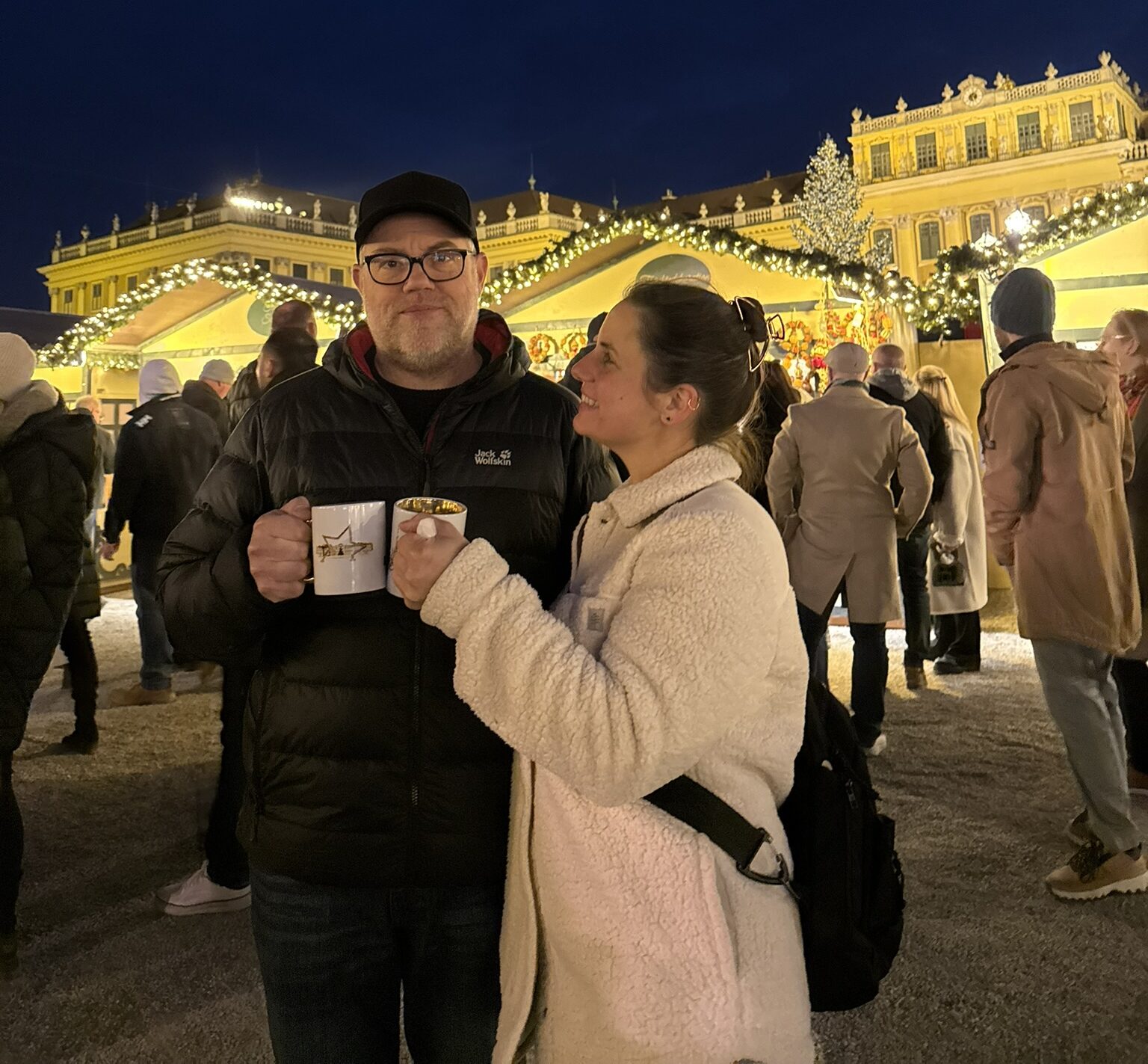
Here’s the thing nobody tells you about what to wear to German Christmas markets: you won’t be walking. You’ll be standing. Standing in line for a Bratwurst. Leaning on a tall table with a mug of Glühwein. Waiting in a crowd for the Christkind, or the Krampus, or the lights to come on. Two hours of standing on cold stone in December is a very different thing from a brisk walk around the block, and most first-timers dress for the walk.
We live in Germany and spend a lot of time outdoors at the markets. Here’s what actually keeps you warm, what works when your hands are full of sausage and hot wine, and what you can leave at home.
How Cold Is It at German Christmas Markets?
Colder than the numbers look. In Munich, December averages a high of about 4°C (39°F) and a low of about -2°C (28°F), and measurable rain falls on roughly half the days, according to 55 years of weather records. The other big Bavarian market cities, like Nürnberg, Regensburg and Passau, are in the same range.
The bigger issue is how much it swings. Some Decembers you’ll get a mild, damp week in the 50s°F, and the next week it’s below freezing at night. And the markets are at their best after dark, which comes early. So plan for cold, wet, and everything in between.
The Golden Rule: Dress for Standing Still
When you walk, your body makes heat. When you stand at a market table for forty-five minutes, it doesn’t. That’s why layers matter more than one heavy coat. You’ll be moving from cold squares into heated shops, restaurants and churches all day long, and you’ll want to peel things off and put them back on.
What to Wear to German Christmas Markets, Layer by Layer
Base layer
Thermal leggings or long underwear under your pants, and a long-sleeve thermal top. Merino wool is the best: warm, thin, and it doesn’t hold sweat or smells. This one layer is the difference between leaving at 6 p.m. because you’re freezing and staying until the market closes.
Middle layer
A wool sweater or fleece. Something you can take off when you duck into a warm Wirtshaus for dinner and not feel like you’re unpacking a suitcase.
Coat
An insulated coat that covers your hips, ideally water-resistant. Hip-length or longer matters, because your lower back is what gets cold at a standing table.
Our chef advice: pick a dark color. Glühwein splashes. Mustard drips. Somebody’s elbow will bump your mug in a crowd at some point. A cream-colored coat will come home with souvenirs you didn’t buy.
Pants
Dark jeans or warm trousers over your base layer. You’ll fit right in. Most Germans keep winter clothes simple and practical. Also, lined jeans or pants work well.
Your Feet Matter Most
If your feet are cold, you’re done for the night. Every time.
- Waterproof boots with real grip. Old-town squares are cobblestone, and in December they can be wet, icy or covered in slush. Ankle boots are easiest to pack.
- Break them in at home. New boots plus a full day on cobblestones equals blisters by lunch.
- Wool socks. Not cotton. Bring enough to change into a dry pair midday if it’s wet. We’ve been wearing Smarwool for years. Here’s our choice for winter socks.
- Sheepskin insoles. You’ll find them for sale at the markets themselves. A layer between your foot and the cold ground makes a bigger difference than you’d expect.
Leave the fashion sneakers at the hotel. They’re cold, they soak through, and the cobblestones will chew up white soles.
Hands: The Christmas Market Problem Nobody Mentions
You need warm hands. You also need to hold a sausage in a roll, peel roasted chestnuts, count coins and carry a hot mug. Big ski gloves are useless for all of that.
What works: thin liner gloves (touchscreen ones are handy for your phone) with a pair of warm mittens or gloves you can pull on over them. Eat with the liners on, put the outer gloves back on when you walk. And keep the mug in your hands. Glühwein is the best hand warmer in the market, and that’s not entirely a joke.
Put a few napkins or a pack of wet wipes in your coat pocket. Most stands hand you one thin paper napkin with a greasy Bratwurst, and you’ll want more.
Head and Neck
A warm hat that covers your ears and a big scarf. That’s it. The scarf does double duty, pulled up over your face when the wind picks up between squares. A hood is better than an umbrella. Umbrellas in a crowded market are a hazard for everyone around you, and you need your hands for food anyway.
What to Carry
- A small crossbody bag that zips, worn in front of you. The markets are packed, and crowds are where pickpockets work. Here’s how we protect our wallets and cards when we travel.
- Cash and coins. More stands take cards every year, but not all, and coins come in handy for the mug deposit and public restrooms, which often charge a small fee.
- A tote bag folded in your pocket, for the ornaments, Lebkuchen and Stollen you said you weren’t going to buy.
- Hand warmers for Krampus night or any evening you plan to stand in one spot for a long time.
Leave the big backpack at the hotel. It’s in everyone’s way in the crowd, and you can’t see what’s happening behind you.
What Locals Wear
Mostly dark: wool coats, puffer jackets, scarves, boots, jeans. Practical over flashy. In Bavaria you’ll also see older locals in loden coats and wool Trachten jackets, which are made for exactly this weather.
Do you need a Dirndl or Lederhosen for the Christmas markets? No. That’s an Oktoberfest thing. A nice wool hat or scarf from one of the market stalls is a better souvenir to wear home, and you’ll actually use it.
What to Wear at Specific German Christmas Markets
- Salzburg on Krampus night (December 5): you’ll stand in one place for an hour or more after dark. Wear every layer you brought, and bring hand warmers.
- Nürnberg: the Hauptmarkt gets very crowded, especially on weekends. Bag in front, nothing in your back pockets.
- Rothenburg ob der Tauber: cobblestones everywhere, and you’ll want to walk the town wall. Grippy boots, and watch the steps when they’re wet.
- Munich and Regensburg: lots of time going in and out of warm restaurants and shops between markets. Layers you can take off quickly make this easy.
Not sure which markets to visit yet? Start with our guide to Bavarian Christmas markets, and plan your eating with our guide to German Christmas market food.
German Christmas Market Packing Checklist
Here’s our picks that are regularly on sale on Amazon.
- Thermal top and leggings (merino if you can)
- Wool sweater or fleece
- Insulated, water-resistant coat that covers your hips, in a dark color
- Dark jeans or warm trousers
- Waterproof boots with grip, already broken in
- Wool socks, enough for a midday change
- Warm hat, big scarf
- Thin liner gloves plus warm outer gloves or mittens
- Small zippered crossbody bag
- Cash and coins
- Napkins or wet wipes
- Hand warmers
- Foldable tote bag
FAQ: What to Wear to German Christmas Markets
How cold is it at German Christmas markets?
In Munich, December averages about 4°C (39°F) during the day and -2°C (28°F) at night, with rain or snow on about half the days. It feels colder because you’re standing outside after dark.
Can I wear sneakers to German Christmas markets?
You can, but you’ll regret it if it’s wet or icy. Waterproof boots with grip are much better on cobblestones.
Do I need a Dirndl or Lederhosen?
No. Traditional dress is for Oktoberfest. At the Christmas markets, people wear normal warm winter clothes. You will see some people in the boiled wool jackets that are traditional, but I have yet to see someone in Lederhosen.
Should I bring an umbrella?
A hood or a water-resistant hat is better. Umbrellas are awkward in crowded markets, and you’ll need your hands for food and drink.
Come to the Markets With Us
From December 3 to 10, 2027, we’re taking a small group of no more than 17 travelers through the Christmas markets of Munich, Salzburg, Passau and Nürnberg, with Krampusnacht in Salzburg, a strudel class, and a Christmas goose dinner on the Danube. Bring your warmest boots. We’ll take care of everything else, including where to find the best Glühwein for your hands.
See the Bavarian Christmas Market Tour 2027
What’s your best trick for staying warm at the markets? Tell us in the comments.